Sep 25, 2026
Private Label EV Chargers for Distributors
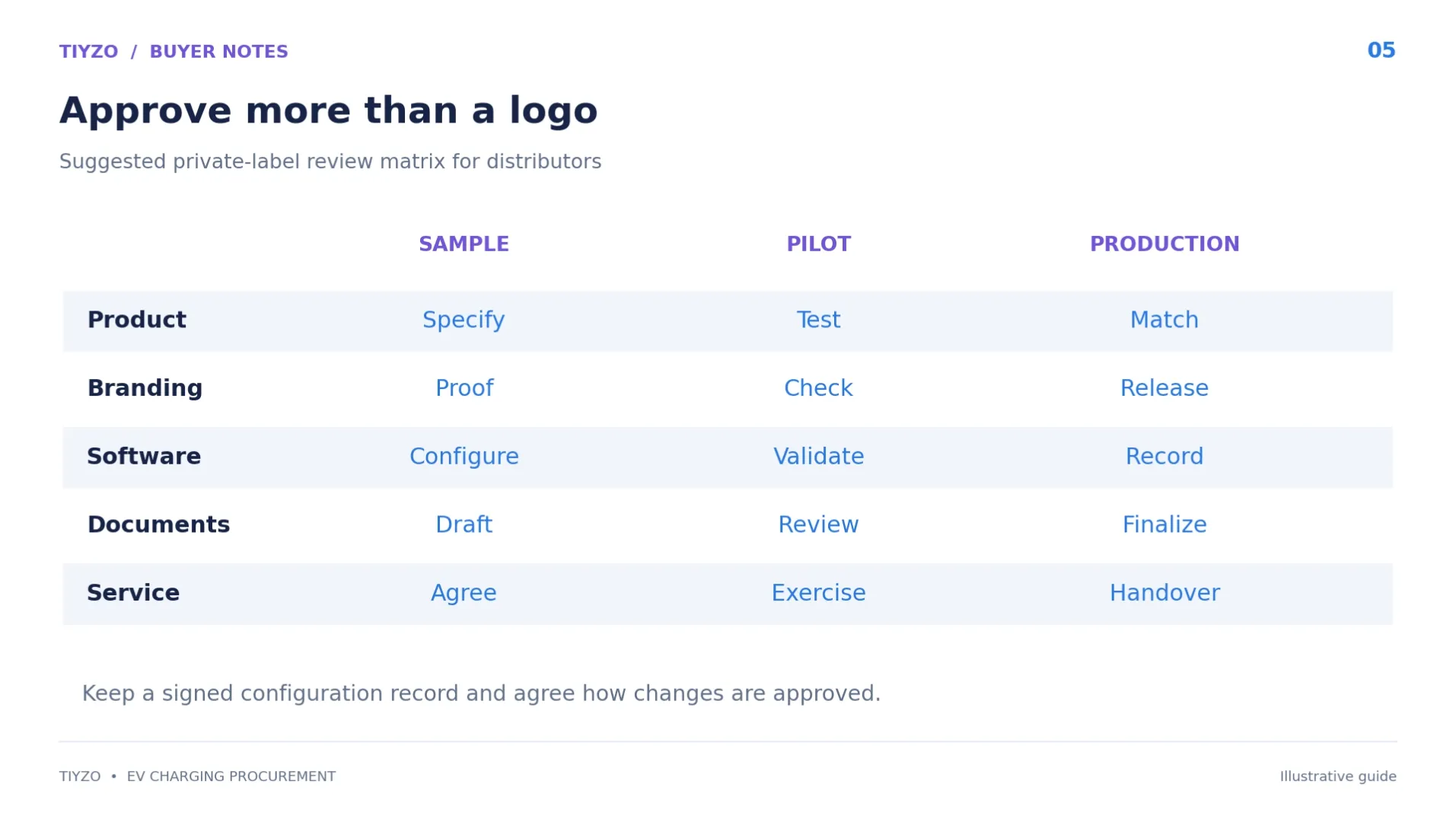
An approval framework for launching a private-label EV charger range — product, branding, software, documentation and service across sample, pilot and production.
An approval framework for launching a private-label EV charger range — product, branding, software, documentation and service across sample, pilot and production.
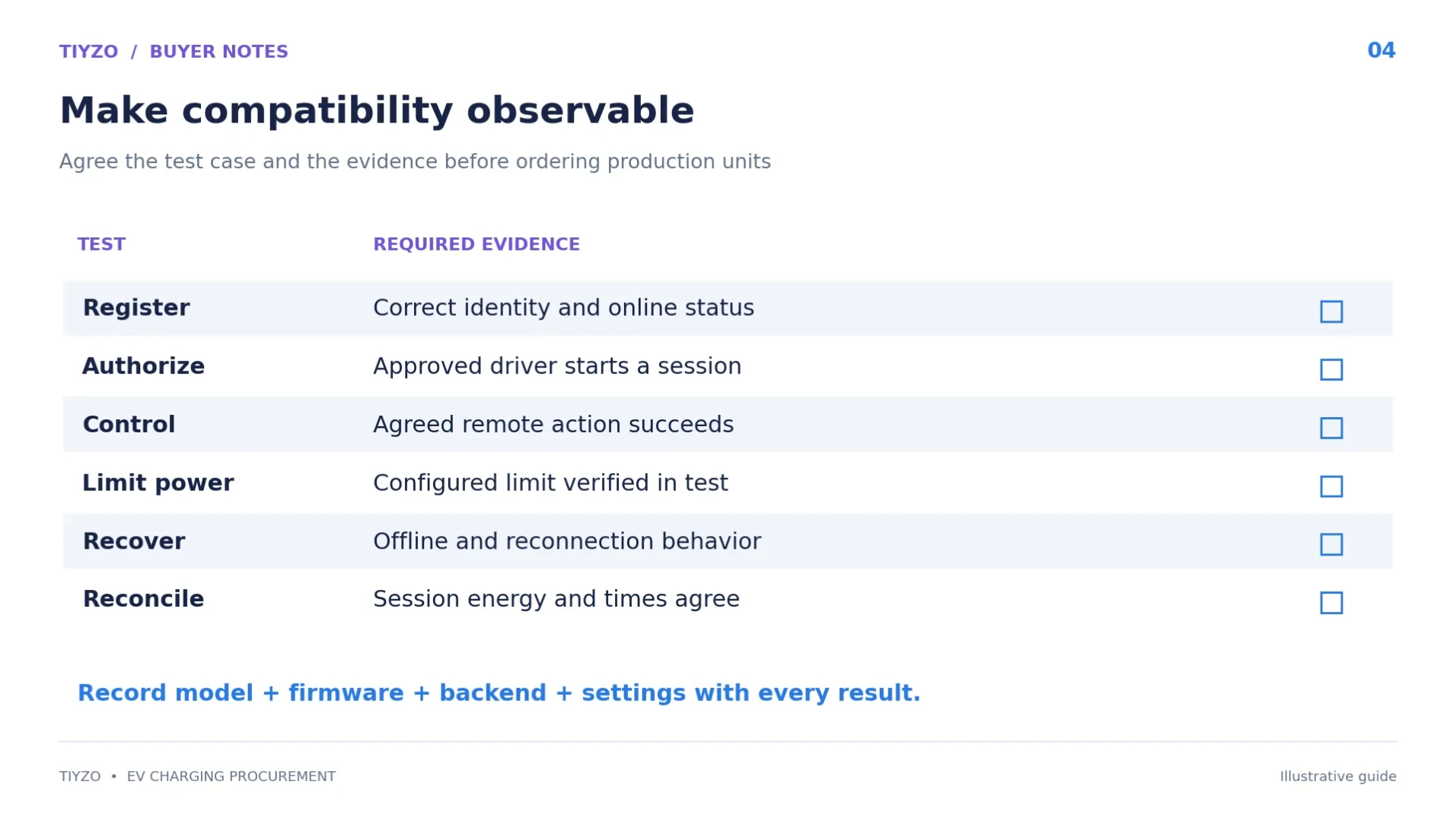
A testable checklist for verifying an OCPP charger against your backend before you commit to a bulk order — registration, sessions, power limits and recovery.

Evaluate a commercial AC charger supplier through certification checks, software testing, local deployment evidence, site trials and a controlled pilot order.
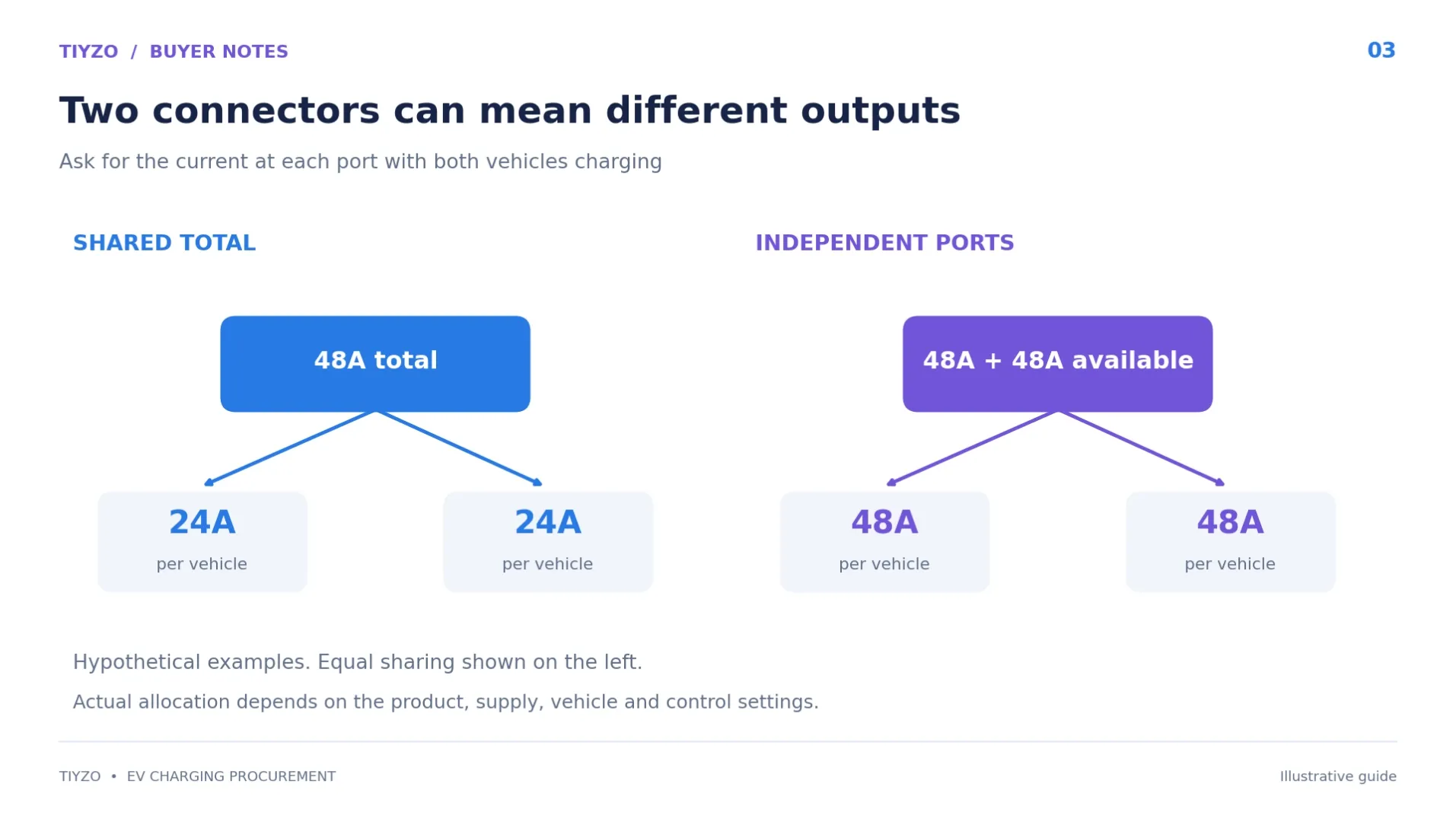
Two connectors do not tell you the current available at each port. How to compare a dual-port station with two single-port units on the same simultaneous output.
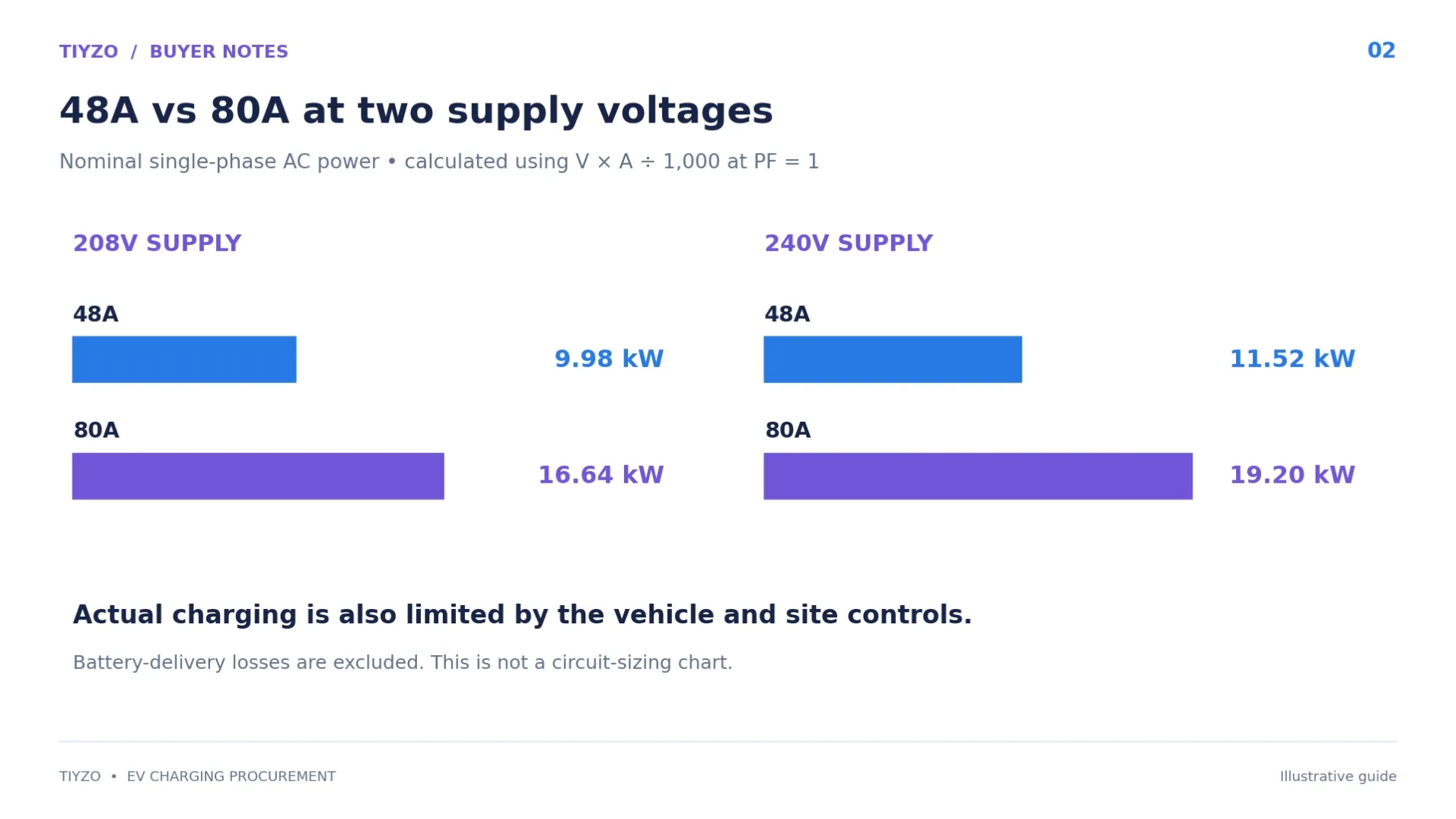
Nominal AC power at 208V and 240V, vehicle limits and parking windows — how to decide whether a 48A or 80A commercial charger fits your site.
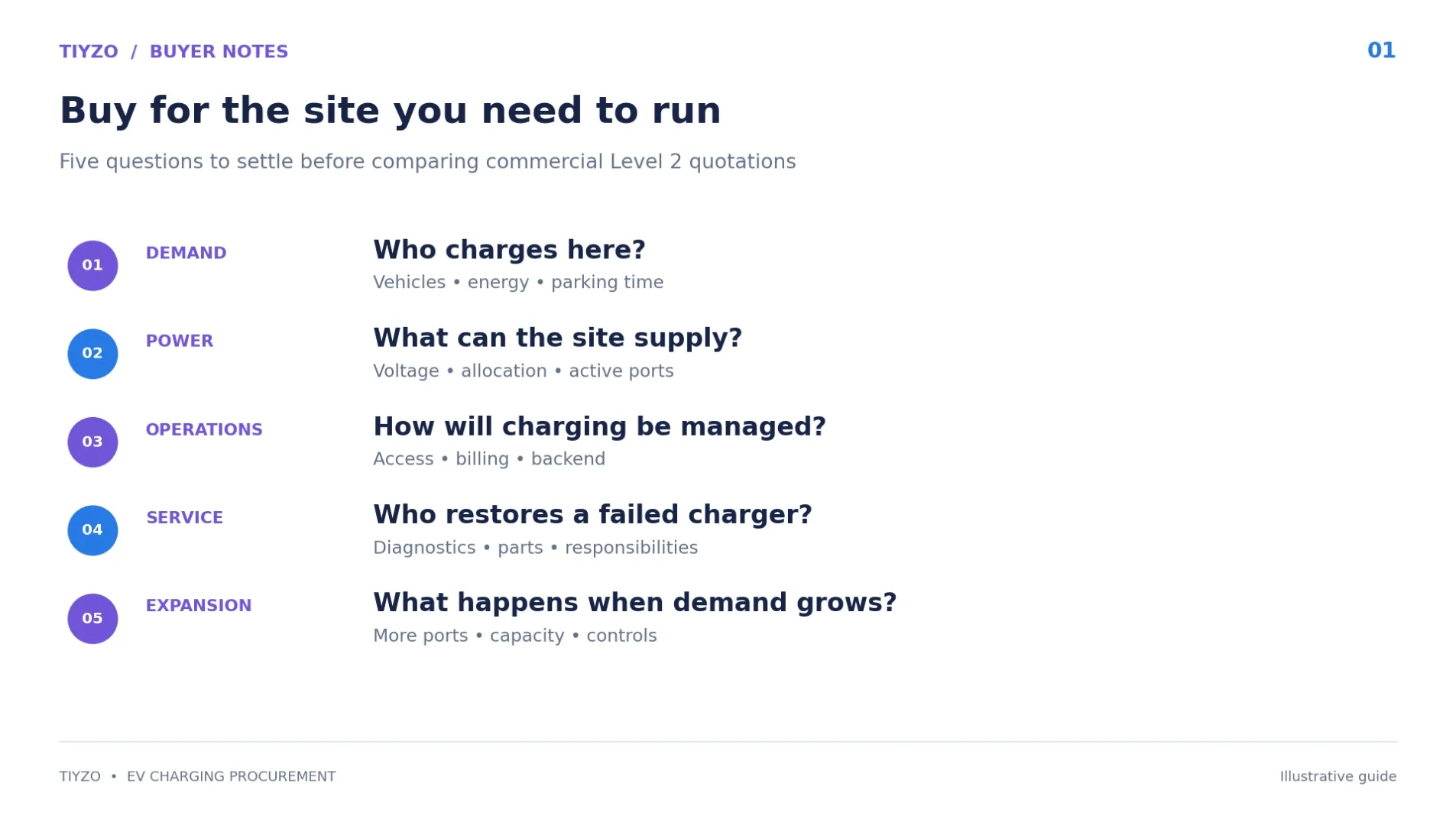
A procurement framework for comparing commercial Level 2 chargers against the same project brief — demand, electrical fit, operation, service and expansion.
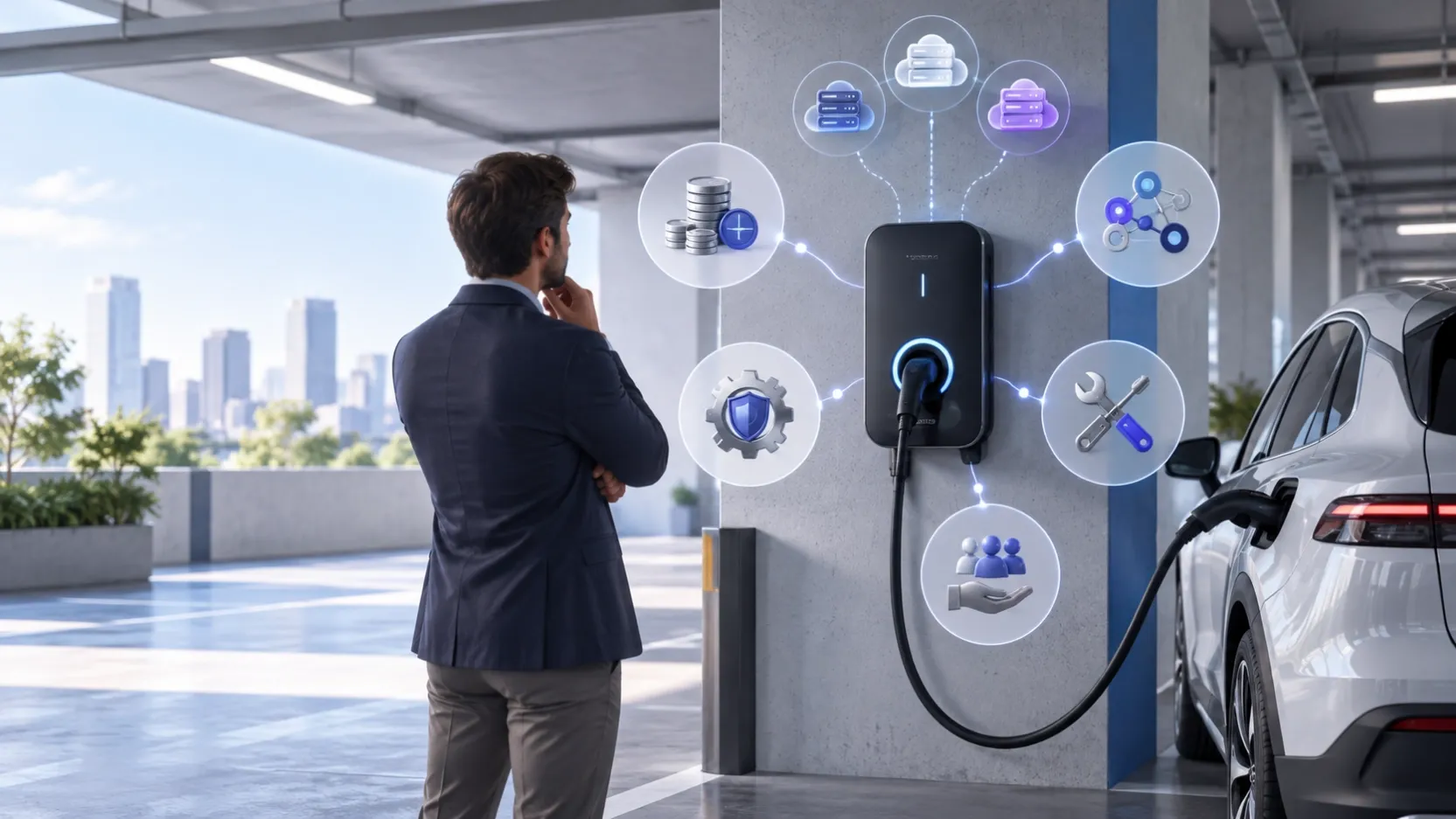
Compare commercial AC EV chargers by OCPP compatibility, software flexibility, reliability, installation, maintenance and long-term operating costs.

Understand commercial AC charging problems, from backend compatibility and network outages to remote diagnostics, firmware updates and supplier support.
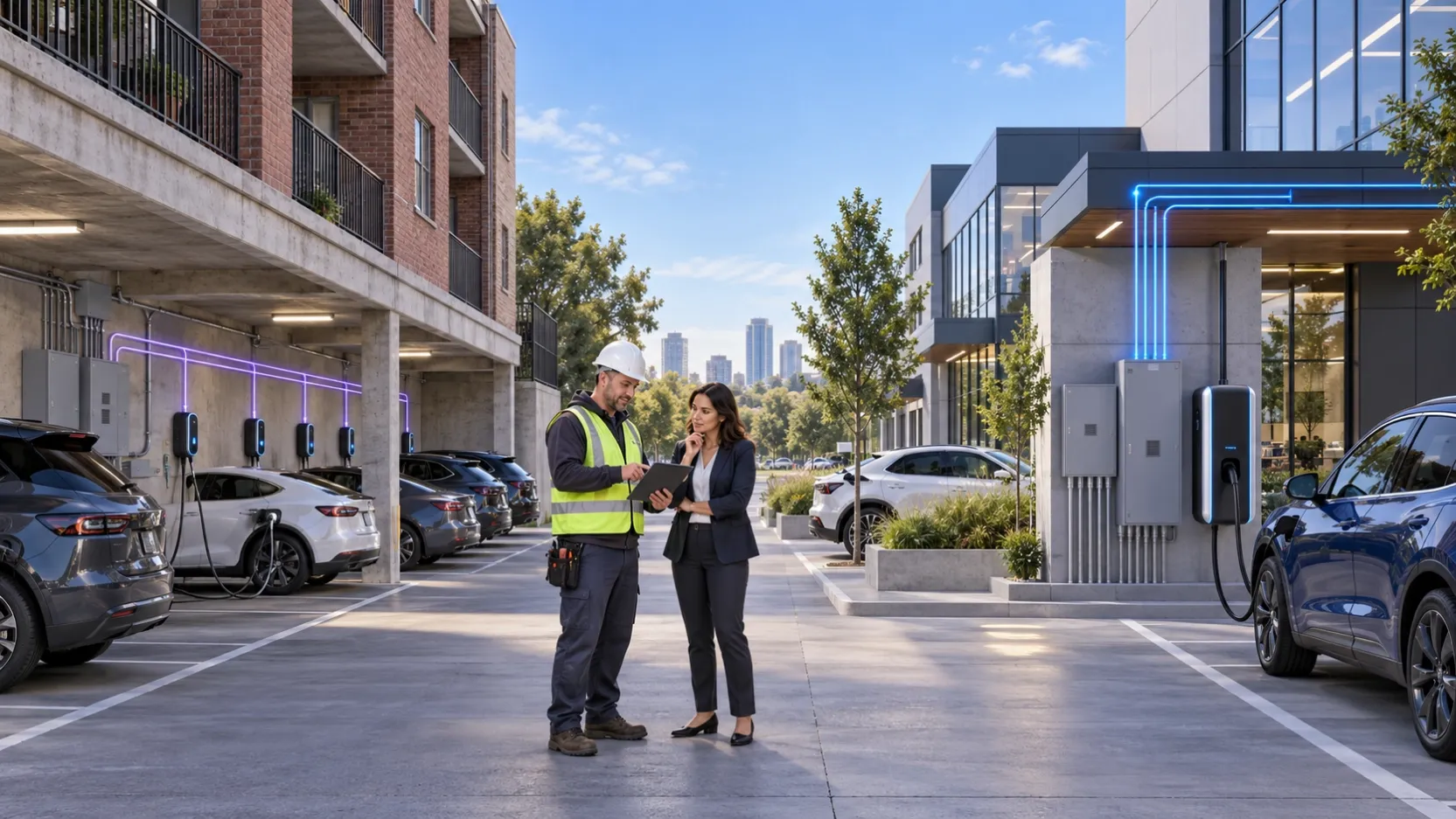
Compare 32A, 40A, 48A and 80A AC charging for North American properties, with a focus on electrical capacity, parking time and existing-building retrofits.
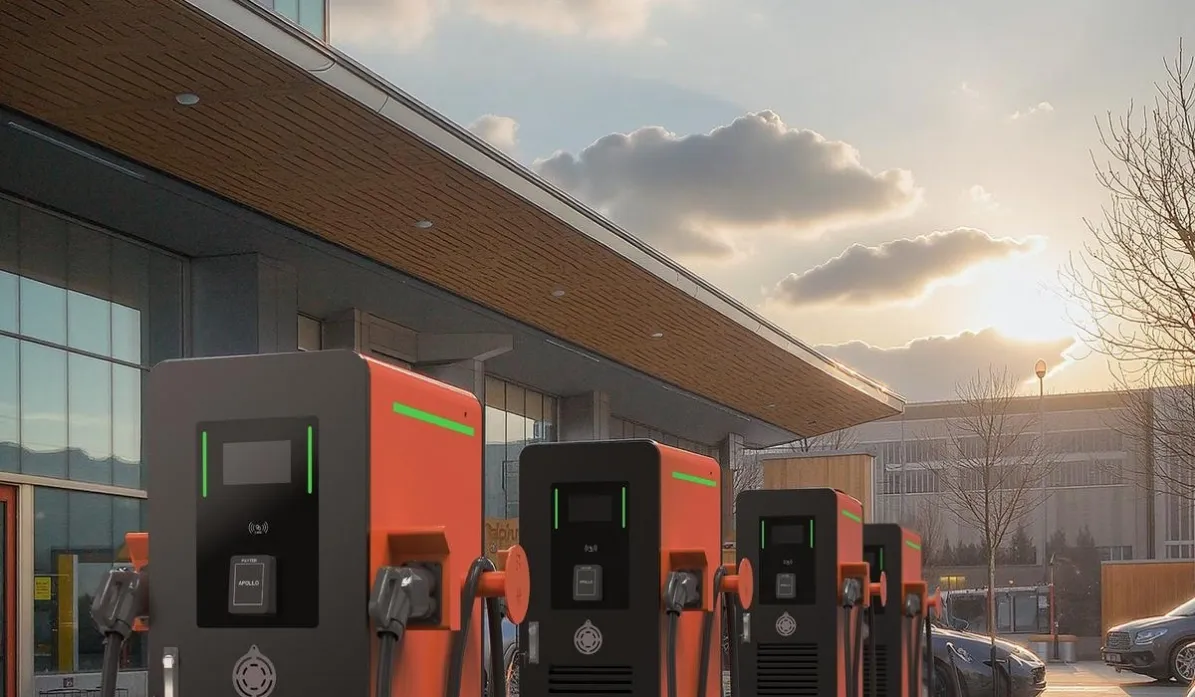
A DC fast charger can cost you more in utility demand fees than in electricity. Here's how demand charges actually work, why fast charging is so exposed, and how load management flattens your peak.